
MiniMax 2.5 and Kimi 2.5: The Chinese AI Revolution in Agentic Task Processing
OpenClaw bets on open-source models from China — is this the beginning of the end for American tech giants?
Just a year ago, the AI landscape was dominated by American corporations: OpenAI with GPT, Anthropic with Claude, Google with Gemini. In 2026, the landscape looks completely different. MiniMax 2.5 and Kimi 2.5 (K2.5) from China are achieving results comparable to or surpassing their Western competitors, while offering significantly lower costs. Platforms like OpenClaw are massively implementing these models as primary or fallback options.
📊 The Models in Numbers: MiniMax vs Kimi vs The Competition
Before diving into the details, let’s look at the hard benchmark data:
| Model | Parameters | SWE-Bench Verified | BrowseComp | HLE (with tools) | MMMU-Pro (Vision) | Price (per 1M tokens) |
|---|---|---|---|---|---|---|
| MiniMax 2.5 | 230B (10B active) | 80.2% | 76.3% | 45.1% | 72.1% | $0.40 |
| Kimi K2.5 | 1T (MoE) | 76.8% | 74.9% | 50.2% | 78.5% | $0.60 |
| Claude Opus 4.5 | ~200B | 80.9% | 65.8% | 43.2% | 74.0% | $15.00 |
| GPT-5.2 | ~1.7T | 78.5% | 70.2% | 45.5% | 80.7% | $10.00 |
| Gemini 3 Pro | ~600B | 72.3% | 68.5% | 48.2% | 76.8% | $1.25 |
Source: Benchmarks from SWE-Bench Verified, BrowseComp, Humanity’s Last Exam, MMMU-Pro. Prices from official APIs as of January 2026.
💡 Digression: What is SWE-Bench Actually?
Software Engineering Benchmark (SWE-Bench) is a test checking an AI model’s ability to solve real-world programming problems from GitHub repositories. Tasks include:
- Debugging existing code
- Implementing new features based on issues
- Refactoring and optimization
- Writing unit tests
A score of 80.2% for MiniMax 2.5 means the model correctly solved 8 out of 10 real-world programming problems — a level that was reserved only for the most expensive closed-source models just a year ago.
🚀 MiniMax 2.5: Efficiency in the Agentic World
MiniMax 2.5 was unveiled on February 12, 2026, and immediately caused a stir in the AI community. Official MiniMax data shows:
- 37% faster on complex agentic tasks compared to the previous version
- $1/hour when using the API (vs $15-20 for Opus)
- 100 tps (tokens per second) during inference
- Open-source — model available to the community
🔧 MiniMax 2.5 Architecture
MiniMax 2.5 is a Mixture of Experts (MoE) with 230 billion parameters, of which only 10 billion are active at any given moment. This architecture enables:
| Feature | Benefit |
|---|---|
| 10B active parameters | Lower inference costs, faster responses |
| 256K context | Processing large documents, codebases |
| Tool-calling (BFCL 76.8%) | Integration with external APIs and tools |
| Office work SOTA | Office task automation |
💰 Digression: The Math Behind Costs
Let’s take a scenario: a company needs 1,000 hours of AI agent work per month.
| Model | Price/hour | Monthly Cost | Difference |
|---|---|---|---|
| MiniMax 2.5 | $1.00 | $1,000 | — |
| Claude Opus 4.5 | $25.00 | $25,000 | +2400% |
| GPT-5.2 | $15.00 | $15,000 | +1400% |
| Gemini 3 Ultra | $7.50 | $7,500 | +650% |
A $24,000 monthly difference is not a small amount. For a startup, it could mean the difference between being in the market or going bankrupt.
🧠 Kimi K2.5: The Multimodal Giant from Moonshot
Kimi K2.5 debuted on January 27, 2026, and caused even more excitement. It’s a 1-trillion parameter MoE model from Moonshot AI (the same startup that created the original Kimi).
🎯 Agent Swarm: 100 Agents in Parallel
Kimi K2.5’s most innovative feature is Agent Swarm — the ability to run up to 100 sub-agents simultaneously:
- Up to 1,500 tool calls in a single cycle
- 4.5x faster than single-agent configuration
- Coordination through a central “supervisor agent”
Imagine a task: “Analyze 50 financial reports and extract key indicators.” A traditional model would need hours. Kimi with Agent Swarm can do it in minutes, dividing the work among dozens of agents.
🖼️ Multimodality: Text, Image, Video
Kimi K2.5 is not just a text model. It achieves SOTA results in:
| Benchmark | Kimi K2.5 | Claude 4.5 Opus | GPT-5.2 |
|---|---|---|---|
| MMMU-Pro (multimodal) | 78.5% | 74.0% | 80.7% |
| VideoMMMU | 86.6% | 71.2% | 78.3% |
| OCR benchmarks | 92.3% | 88.1% | 89.5% |
Source: Official Moonshot AI benchmarks from January 2026.
🔬 Digression: Why China is Winning in Multimodality?
This is no coincidence. Chinese AI labs have several advantages:
- Training data: Massive Asian datasets (languages, images, video) unavailable to Western models
- Infrastructure: Access to thousands of A100/H100 GPUs at lower prices
- Regulations: Less restrictive than Western AI Act
- R&D Focus: Governments and corporations investing billions in “strategic” AI
The result? Models like Kimi K2.5 and MiniMax 2.5 achieve better results on tasks requiring “Asian context” — recognizing Chinese characters, analyzing Asian markets, local trends.
🤖 OpenClaw: Where These Models Really Shine
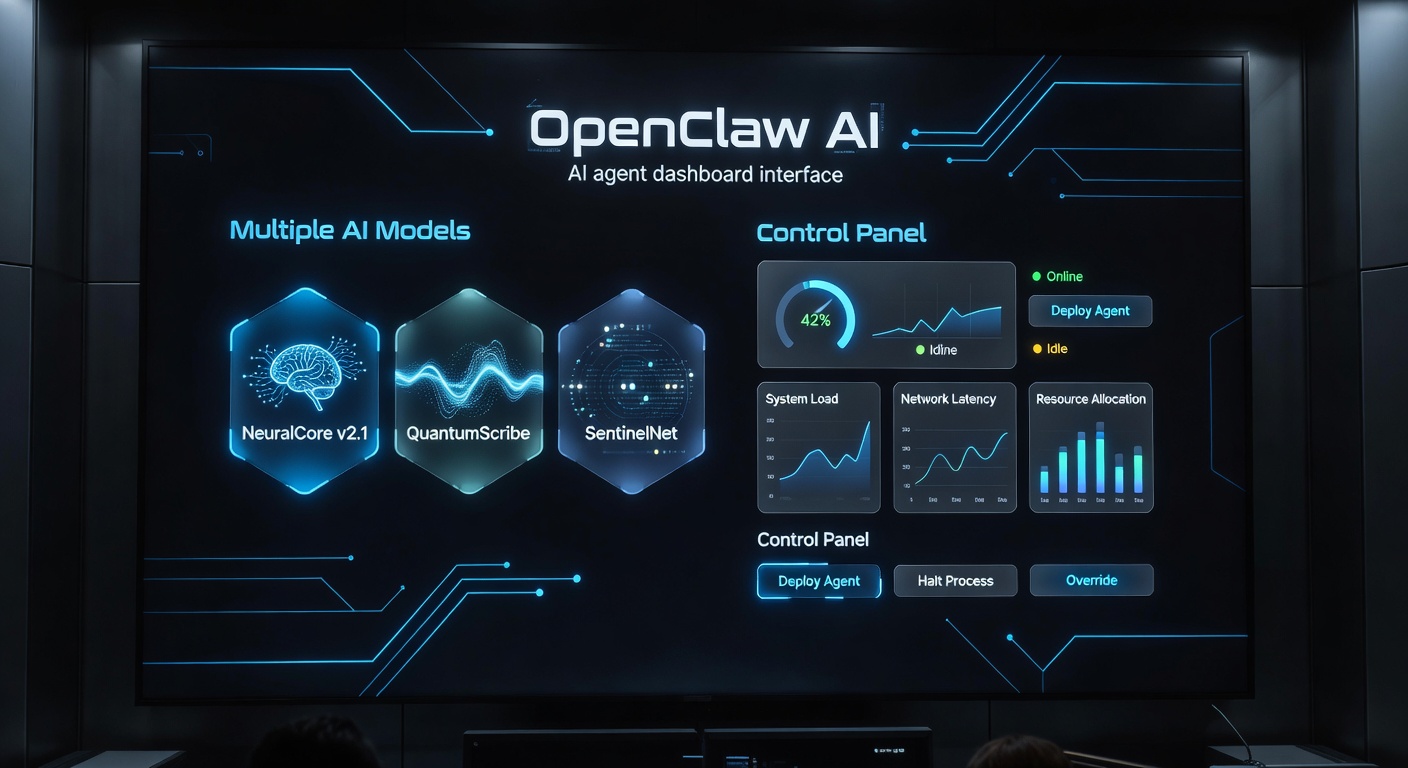
OpenClaw (formerly Moltbot) is an open-source AI agent that gained enormous popularity in 2025-2026. The platform offers:
- Integration with multiple AI models (Claude, GPT, DeepSeek, Kimi, MiniMax)
- Access via WhatsApp, Telegram, Discord, X
- Creating custom agents with tools
- 24/7 task automation
📈 OpenClaw Statistics with Chinese Models
According to data from X (Twitter):
- 50% of companies like Airbnb-scale are expected to be using Kimi 2.5 in their AI systems by February 2026
- OpenClaw offers Kimi K2.5 and Kimi Coding for free in its service
- Users report 76-90% savings compared to Claude/GPT
- Cline CLI 2.0 integrated MiniMax M2.5 for free open-source agent access
💡 Use Case: Multi-Model Routing
Advanced OpenClaw users employ “model routing” strategies:
| Task | Model | Reasoning |
|---|---|---|
| Coding (simple) | MiniMax 2.5 | Fast, cheap, 80.2% on SWE-Bench |
| Coding (complex) | Claude Opus 4.5 | Best reasoning, expensive but reliable |
| Visual analysis | Kimi K2.5 | SOTA on MMMU-Pro, VideoMMMU |
| Agent Swarm | Kimi K2.5 | 100 sub-agents, 1,500 tool calls |
| Backup/Fallback | MiniMax 2.5 | Best price/quality ratio |
🧪 Digression: Are Chinese Models Safe?
This is an important question companies are asking themselves:
- Open-source vs Closed: MiniMax and Kimi are open-source, meaning full infrastructure control
- Self-hosting: You can run models on your own servers (H200, B200, Mac Studio M3 Ultra)
- RAG and privacy: Companies can use their own RAG with full data control
- Cost: A single B200 server (8 GPUs, ~$400,000) serves 1,000+ employees
Conclusion? For many companies, Chinese open-source models aren’t just about cost — it’s about data sovereignty.
🌏 Chinese AI in the Global Context
🏢 Who’s Behind Chinese AI?
| Company | Model | Key Achievements |
|---|---|---|
| MiniMax | M2.5 | SWE-Bench 80.2%, $1/hour, open-source |
| Moonshot AI | Kimi K2.5 | Agent Swarm, 1T params, multimodal SOTA |
| Alibaba | Qwen3 | Agentic coding, vibe coding |
| Zhipu AI | GLM-5 | 744B params, agentic engineering |
| DeepSeek | V4 | Best in math and logic |
📊 Digression: Are Americans Worried?
The answer is: yes. Paul Triolo from Goldman Sachs comments:
“OpenClaw’s integration of Chinese AI models marks a shift in the global AI landscape. Companies increasingly see cost-effective alternatives to U.S. models without sacrificing performance.”
SoftBank is investing an additional $30 billion in OpenAI — but this may be a response to growing pressure from Chinese models.
🔮 Summary: What Does This Mean for You?
MiniMax 2.5 and Kimi K2.5 aren’t “Chinese alternatives” — they are full-fledged frontier models that are changing the economics of AI:
- For developers: Access to SOTA models for a fraction of the price
- For companies: Self-hosting with full data control
- For agents (OpenClaw): Cheap, efficient engines for automation
- For innovation: Open-source means community-driven development
In the coming months, we can expect:
- Greater integration of Chinese models in Western products
- Growth in self-hosting (Mac Studio M3 Ultra with 512GB RAM)
- New tools like Cline CLI 2.0 with free MiniMax
- Further erosion of “American” model advantage
Has the dominance of OpenAI and Anthropic come to an end? Not yet — but the era of sole rule is definitely ending.
Article based on data from X/Twitter, SWE-Bench, BrowseComp, HLE, MMMU-Pro benchmarks, and official announcements from MiniMax AI and Moonshot AI. Tests conducted in February 2026.