

The Economics of the Iran War: Oil, Gold and the New Map of Sanctions
I've spent my career in economics watching how markets price conflict. Wars are terrible for people, but they are brutally efficient at revealing how the global financial system actually works. The ongoing Iran war — now in its fifth month since the Strait of Hormuz crisis began in late February — is doing exactly that.
What strikes me most as an economist isn't the missiles or the drones. It's the money. Let me walk you through what the numbers are telling us, because they point to a structural shift that will outlast the conflict itself.

Oil: The Profits of War
The clearest signal is crude. When Iran and its partners threatened shipping in the Strait of Hormuz — the chokepoint for roughly a fifth of global oil — the market did exactly what any economist would predict. Prices spiked, volatility returned, and the oil majors reported numbers that would have seemed obscene a year ago.
BP's latest results told the story plainly: a $5.7 billion profit, its highest since 2022, driven directly by the war pushing up crude prices. This is the uncomfortable arithmetic of conflict — the same instability that raises costs for households and businesses translates into record earnings for energy producers.
And the physical risk hasn't gone away. Analysts describe the threat to oil tankers in the Middle East as the worst since the war began. Every negotiation over the Strait of Hormuz — whether it reopens or stays contested — moves the price of everything downstream of crude: fuel, freight, food, manufacturing.
Gold: The Return of the Safe Haven
This is where my own analysis from last year comes back to me. Back in May 2025, in an article for Finance, I wrote about the rising role of gold in central bank strategies — how banks that had spent two decades selling gold were suddenly accumulating it as a hedge against a fragmenting world. I argued then that gold was no longer just a commodity; it was becoming a strategic reserve asset again.
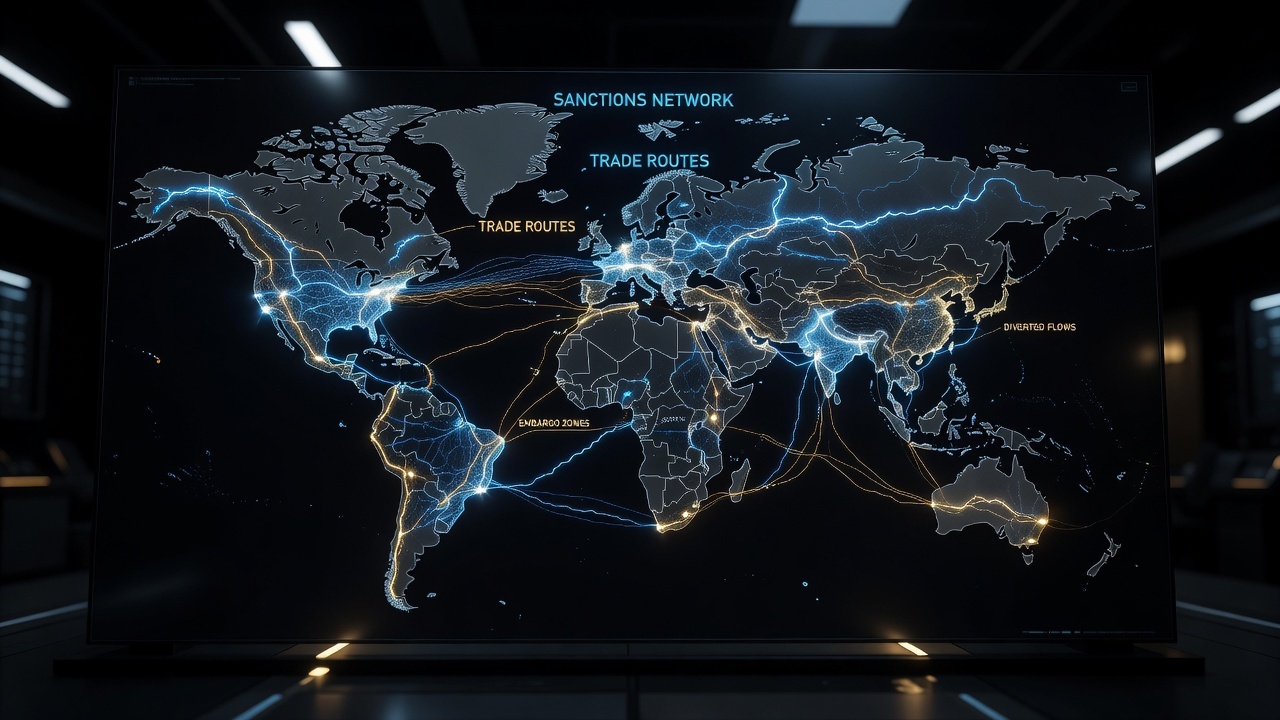
The Iran war has proven that thesis in the most direct way possible. When sanctions tighten, when shipping lanes close, when trust in institutions wobbles, the first thing both states and individuals reach for is gold. It is the one asset with no counterparty risk — no bank can freeze it, no algorithm can short it into oblivion, no government can print it into dilution.
You can read the full reasoning in my earlier piece — Rising role of gold in Central Bank strategies — but the short version is that central banks were already repositioning before this war. What's happening now is simply the acceleration of a trend that was already underway.
Sanctions as a Weapon of Economic War
The third pillar of this new map is sanctions. And here the war has changed the rules.
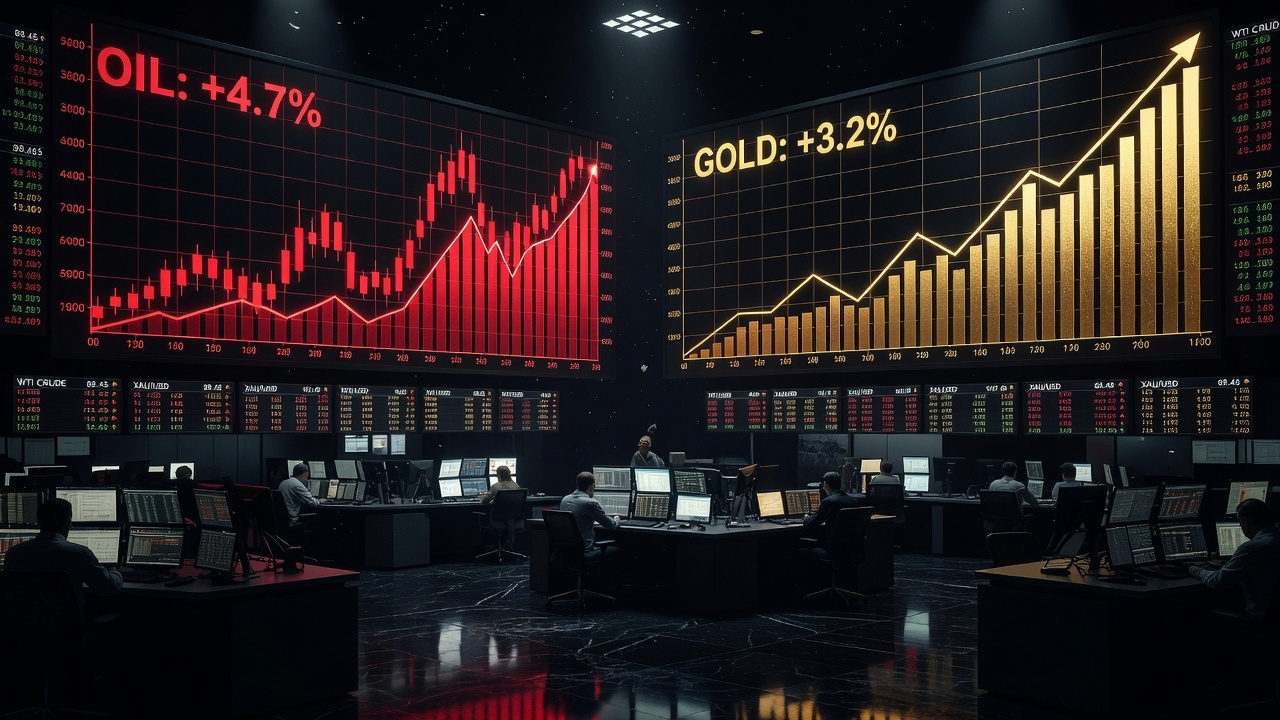
In May, the US threatened shipping firms with sanctions if they paid tolls to Iran — an attempt to choke off a revenue stream that funds the conflict. We've also seen sanctions deployed far from the Middle East: on a Russian ship defying restrictions to move military vehicles to Mali, on the DR Congo's former president, on Cuba. The pattern is unmistakable.
Sanctions have become the default tool of economic statecraft — cheaper than bullets, and often just as effective. But they come with a cost: they accelerate the very fragmentation that makes the world less predictable. Countries under pressure build parallel systems — barter, gold, alternative payment rails — and that undermines the dollar's long-standing dominance.
What This Means
As an economist, I don't predict the end of this war. Nobody honestly can. But I can tell you what the financial structure around it looks like:
1. Energy will stay volatile — as long as the Strait of Hormuz is contested, oil carries a war premium, and that premium bleeds into every price you pay.
2. Gold's renaissance is structural — central banks aren't going back to selling it. The reserve-accumulation trend I identified last year has only strengthened.
3. The sanctions map is redrawing global finance — the more sanctions we impose, the faster the world builds alternatives to the dollar system.
This is the quiet, unglamorous side of the conflict. No headlines, no explosions — just the patient arithmetic of who wins and who pays. And if you want to understand where the war is actually going, forget the front lines for a moment. Watch the price of a barrel, the holdings of a central bank, and the list of who's being sanctioned.
That's where the real story is.
Gracie Nguyen is an economist specializing in macroeconomics and global financial markets. She has previously written for Finance on gold and central bank reserve strategies.
The way the Iran war is reshaping energy markets and accelerating the pivot toward gold as a strategic reserve perfectly illustrates the broader structural shift toward a fragmented global economy, a theme I’ve been following closely since seeing the insights in From Rules-Based Order Collapse to Multipolar Scenarios, which I recently came across.
From my experience advising on economic policy reforms, I have seen firsthand how the weaponization of sanctions often triggers the “parallel systems” mentioned here, essentially creating a feedback loop that weakens the very international norms we rely on for stability. If the shift toward a multipolar world is already being codified through these new financial “maps,” how can we ensure that the resulting economic fragmentation doesn’t lead to a permanent state of volatility for the world’s most vulnerable populations?
the profound sadness of a world where human suffering is reduced to a line item on a balance sheet. It is heartbreaking to see how the “uncomfortable arithmetic” of war transforms the basic needs of humanity into mere profit margins for the powerful. There is a heavy, lingering nostalgia for a time when global trade felt like a bridge between people, rather than a series of calculated bottlenecks and weaponized sanctions.
In my own work observing market trends, I’ve seen how quickly the “trust” we once built in global systems can evaporate, replaced by the cold, hard weight of gold. It feels like we are retreating into a fortress of old-world assets because the modern one has become too fractured to feel safe in. Even the way we share these stories is changing; I’ve noticed that agencies like Holik Studios are having to use much more sophisticated, data-driven strategies just to cut through the noise of this increasingly fragmented and cynical information landscape.
It makes me wonder as we watch these parallel systems rise and the dollar’s shadow recede, are we witnessing the inevitable end of a unified era, or just the birth of a much more isolated, transactional world?